
Granite countertop cost can feel confusing, and most homeowners tell us the same thing once they start shopping. They see granite countertops cost anywhere from $75 per square foot installed to more than $200 and wonder why the gap is so wide.
The reason is simple. Granite slabs are natural products, not mass-produced materials, so pricing shifts with color, rarity, thickness, and project details. After installing thousands of granite countertop projects across the Capital Region, we help homeowners understand these cost factors early so budgeting feels clear and predictable.
The Material Factors That Affect Granite Countertop Prices
The Type and Rarity of the Granite Slab
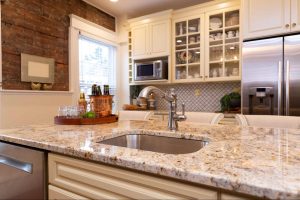
Standard granite sits at the lower end of the range because it is widely available and easier to source. Rare or exotic granite, on the other hand, comes from quarries with limited production, unique colors, or bolder patterns, which naturally increases cost.
Quarry location and shipping distance also play a role. Slabs that travel farther or require special handling come in at a higher price. Darker granite colors sometimes fall into this group because certain minerals are harder to find.
At Distinctive Surfaces, we see homeowners gravitate toward mid-range colors with good movement. These offer the look they want without the steep jump in price. Availability is a major factor, and we walk customers through how each slab’s origin affects its final price so there are no surprises.
Thickness of the Granite Slab
Most granite slabs are fabricated at a standard thickness, and slab thickness plays a role in overall pricing. Thicker granite requires more raw material and additional fabrication time, which can affect the price per square foot.
At Distinctive Surfaces, granite countertops are typically fabricated in 3cm thickness, providing a solid, durable surface without the need for added build-up or lamination.
Thicker pieces change how the edge looks, how seams appear, and how the countertop feels in the room.
They also add weight. More weight means more fabrication steps, stronger support, and a larger installation team. These details all influence the total cost of granite countertops, which is why we help homeowners compare the look and long-term benefits before deciding.
Finish Type: Polished, Honed, Leathered Granite
Polished is usually the lower cost option because it is the most common and the easiest to produce consistently. Honed and leathered granite may cost more because the finishing process takes longer and requires additional equipment or handwork.
Leathered stone also tends to show fewer fingerprints and smudges but may require slightly different maintenance habits. We explain these differences during slab selection so homeowners can choose a finish that fits both their taste and their routine.
Color and Pattern Complexity
Slabs with calm, consistent patterns typically fall into lower price groups. Stones with dramatic veining, intense movement, or rare mineral combinations almost always cost more because they are harder to source and harder to match across a full kitchen.
When a project needs multiple pieces, pattern matching can increase the final price. In our showroom, we line slabs up side by side so homeowners can see how movement flows across each piece. This helps them understand why certain granite slabs come at higher prices and whether the look is worth the investment.
The Project Factors That Influence the Overall Cost
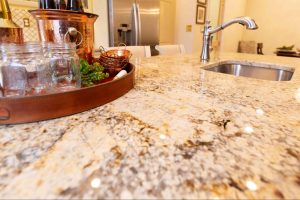
The initial price of granite countertops is always quoted per square foot installed, but to get an accurate total, we have to look closely at the specifics of your job. Here are the practical factors that cause countertop costs to vary.
1. Kitchen Layout and Square Footage
The geometry of your kitchen countertops is the first major cost driver. While simple, straight runs are efficient, complex layouts require specialized labor and fabrication.
- Complexity vs. Simplicity: L-shapes, U-shapes, and multiple peninsulas all require more precise measurements, especially around corners and cutouts. Every extra corner, every specialized curve, and every long span demands higher accuracy and more intricate cutting and polishing labor.
- The Piece Count: More pieces mean more seams to polish and blend, increasing the fabrication time. When installing granite countertops, minimizing the number of seams while ensuring the flow of the natural stone pattern is a key skill that factors into the final price.
2. Edge Profiles and Custom Fabrication
This is where your design choice directly affects the price.
Standard vs. Decorative: Standard edges, like a Demi Bullnose, are highly efficient for us to produce using our advanced CNC equipment. Premium or decorative edges, such as an Ogee or a complex mitered Waterfall, require additional CNC programming time and significant hand finishing to ensure a flawless look. These detailed profiles add cost because they demand increased precision and time from our skilled craftsmen.
3. Additional Cutouts and Custom Features
Any feature that requires us to cut into the granite slab will raise the cost, as each action increases the complexity and risk associated with the slab.
The List of Cutouts: Sinks, specialized cooktops, faucet holes, electrical outlets, and custom bump-outs all add fabrication time. Each cutout increases countertop prices because it requires precise machining and careful polishing to maintain the slab’s integrity.
Distinctive Surfaces Insight: We help you avoid unnecessary costs by reviewing your plans early. We can advise on sink configurations or layout tweaks that reduce complex cuts while still achieving your desired kitchen design.
4. Installation Complexity
A seemingly simple job can become complex quickly due to the logistics of getting the stone into your home.
Weight and Access: Granite is heavy. The weight of the stone dictates the number of installers needed. If your home has tight entryways, multiple sets of stairs, or difficult angles, the specialized effort required to safely maneuver and place the heavy material will impact the overall cost.
Proper, precise installation protects the long-term durability of your home and is essential for maintaining its resale value.
5. Removing Old Countertops
Before installing granite countertops, the existing surface must often be removed. This step can add a surprise expense to the overall project cost.
The Old Surface Matters: The effort required for the removal of old countertops differs significantly. Lifting an old, lightweight laminate counter is less work than carefully removing heavy, older granite counters or breaking up tiled surfaces. This stage also includes necessary disposal fees, which must be accounted for by the homeowner.
6. Location and Market Availability
The final price is always anchored to local market realities and material sourcing.
Local Market Dynamics: The cost of granite countertops in the Capital Region is influenced by our specific market dynamics. While we source efficiently, extremely uncommon or exotic colors may cost more to source due to shipping and import fees. However, choosing readily available, beautiful local slabs can help lower the overall price, as the countertops may already be in stock.
Next Steps: Talk to a Local Granite Fabricator Before You Set a Budget
Understanding the factors that influence the price of granite countertops is the most important step in budgeting for granite countertops. As your local fabricators, we believe in complete transparency. We use precise measurements and upfront communication to ensure you know exactly what you are investing in granite countertops before we cut the first piece.
Ready to find the right granite for your kitchen and get a clear, detailed price breakdown?
Visit our Round Lake showroom to compare granite colors and grades and let our non-pushy team guide your selection.
Schedule a consultation to review granite slabs and pricing today.
FAQs About Granite Countertop Pricing
How much do granite countertops cost per square foot installed?
Granite countertops can vary widely, but most projects fall somewhere between 75 and 200 per square foot installed, depending on the slab, layout, finish, and fabrication needs.
Why do granite slabs vary so much in price?
Price shifts come from rarity, quarry location, pattern complexity, and availability. Common, consistent slabs stay on the lower end. Exotic colors or high-movement patterns sit at the top.
Is exotic granite worth the higher price?
For homeowners who want a one-of-a-kind look, exotic granite can be worth the investment. It offers unique depth and visual movement you won’t see in standard granite.
Does granite cost more than quartz?
Sometimes. Mid-range granite and mid-range quartz often overlap in price. Exotic granite tends to cost more, while standard granite can cost less than many quartz options.
What affects the cost of removing old countertops?
Material type, how the old surface was installed, and disposal needs all influence the removal price. Laminate is quick. Tile or older stone takes more time and care.
How does thickness change the total cost?
Thicker slabs increase material cost, fabrication time, and installation labor. They offer a bold look, but the upgrade affects the final price for granite countertops.
Is granite a good investment for resale value?
Yes. Granite remains a sought-after countertop material and continues to add value to your home, especially when paired with strong layout and color choices.
Does leathered granite cost more than polished?
Typically yes. Leathered granite takes longer to finish and requires more specialized equipment, which puts it at a higher price point than polished granite.