
You chose quartz countertops for their incredible durability and low maintenance and care, but here’s a crucial fact: they are not heat-resistant. Many homeowners assume that because quartz is so tough, it’s immune to high temperatures.
As experienced fabricators installing these kitchen countertops daily, we know the truth lies in the resin. We’ll clarify how much heat your quartz countertop can actually handle and how to prevent costly damage.
Understanding How Quartz Responds to Heat
What Quartz Is Made Of and Why It Matters for Heat
Quartz countertops get their strength from engineered quartz, which is a blend of ground natural quartz, resin binders, and pigments.
The quartz itself can handle a significant amount of heat. The resin cannot. That is the key difference homeowners need to understand. In natural stone countertops like granite, there are no resin binders, so the material reacts differently when exposed to high temperatures.
In engineered quartz, the resin is the weak link. When a cold surface meets sudden heat, thermal shock becomes a real concern. This is why quartz offers great durability for everyday use, but is not fully heat-resistant in the way many homeowners assume.
How Much Heat Can Quartz Countertops Withstand?
Quartz countertops can tolerate warm items and brief contact with moderate heat, but the resin begins to react when temperatures reach roughly 150 to 200 degrees Fahrenheit. This is the point at which heat exposure can leave a mark. Heat-resistant does not mean heat-proof, and quartz falls into that middle ground.
Warm dishes, coffee mugs, and room-temperature cookware rarely cause issues. A pot or pan straight from the stove or oven is a different story. That kind of heat transfers instantly and can damage the resin before the surface has time to adjust.
What Heat Damage Looks Like on Quartz
When quartz is exposed to excessive heat, the damage shows up quickly. You may see yellowing or dark discoloration where the resin has burned. Dull patches are also common because high heat can disrupt the surface texture. In some cases, the resin warps enough to leave a visible depression or distorted spot.
These issues are usually permanent because once the resin is compromised, it cannot be polished back to its original state. We’ve seen this happen during consultations when a homeowner placed a hot pan directly on the quartz or left a slow cooker running on the countertop without a trivet. The damage is subtle at first, then permanent.
Why Quartz Behaves Differently Than Granite Under Heat
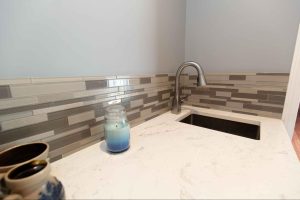
Quartz and granite often get compared because both materials are strong, scratch-resistant, and popular for kitchen countertops. Heat is where the differences show up. Granite is a natural stone and does not depend on resin binders, so it handles hot items better. Quartz is engineered, and the resin limits how much heat it can tolerate.
A simple scenario explains it well. Set a hot pan on granite, and the stone usually shrugs it off. Set the same pan on quartz, and the resin may react within seconds. This is why we always help homeowners understand the strengths and limits of each countertop material before choosing the right fit for their kitchen.
How Homeowners Can Protect Quartz Countertops From Heat Damage

Quartz is built for durability, but preventing heat damage is essential for the material’s longevity. We want your quartz countertops to look as flawless ten years from now as they do on the day of granite countertop installation. The key is simple, consistent habits.
1. The Best Ways to Prevent Heat Damage
To effectively protect quartz countertops, homeowners need to understand the material’s vulnerability. The engineered resins that bind the stone components are simply not designed to withstand sustained, high temperatures.
- Always use trivets or hot pads. This is the single most important rule. Never risk placing hot items directly on the quartz countertop surface.
- Avoid placing hot items straight from the oven or stovetop onto the surface. The extreme, focused heat from a hot pan or hot pot can cause immediate thermal shock.
- Keep appliances that generate heat (like air fryers, Instant Pots, or electric skillets) slightly lifted or insulated from the surface. The sustained, trapped heat underneath them can cause damage over time.
Consistent daily habits like these are the best way to prevent heat damage and keep your quartz surfaces looking new for years.
2. Everyday Kitchen Scenarios to Watch Out For
Many homeowners risk their quartz countertop without realizing it, often during routine kitchen activities.
- Moving a pan from the oven to the countertop: This quick transfer is often the culprit. A hot pan resting briefly can still compromise the resin, causing dullness or discoloration.
- Slow cookers or griddles running for hours: The low, continuous heat generated by these devices can accumulate, especially if heat is trapped beneath them, slowly causing a localized scorch mark.
- Curling irons or hair tools in a bathroom: This applies to bathroom vanities, too. Always use a protective silicone mat underneath any hot styling tools.
- Heat trapped under cutting boards or towels: If you place a hot item on a protective layer and then cover it, the trapped heat can intensify the risk of damaging the surface underneath.
3. Long-Term Care to Keep Quartz Looking Its Best
While addressing heat is primary, simple maintenance and care ensure the longevity of your investment.
- Clean with a soft cloth and mild dish soap. Avoid harsh chemicals or highly acidic cleaners.
- Avoid abrasive scrubbers that can scratch the smooth, polished surface of the quartz.
- Understand that stain resistance does not equal heat resistance. Quartz is naturally non-porous and will resist most stains, but this feature does not protect it from thermal damage.
Proper maintenance and care, especially heat protection, help your quartz countertop last for decades, maximizing the value of your initial investment.
4. When Heat Damage Happens: What Homeowners Should Know
The unfortunate reality is that many severe heat burns on quartz are permanent.
- The Resin is Compromised: Extreme heat breaks down the resin binder in the quartz, resulting in a whitish ring or a permanent, dull blister. Once the resin is compromised, the material is fundamentally changed.
- Repair Limitations: Light dull areas or surface hazing may sometimes be improved through professional polishing, but the goal is usually only to reduce visibility, not to fully remove the damage.
- Call Your Fabricator Early: If damage occurs, calling us at Distinctive Surfaces early helps us assess realistic repair options. In severe cases, where the discoloration is deep and pronounced, replacement of that specific section may be the only solution to restore the flawless look of your kitchen countertop.
Talk to a Fabricator Who Knows How Quartz Behaves in Real Kitchens
Choosing the perfect countertop material means finding the right balance between beauty, ease of maintenance, and practical durability. Since we handle both quartz and granite every day, we provide unbiased, local expertise rooted in real-world applications.
We’re here to give you clear guidance on maintenance, longevity, and which material truly fits your busy life.
Schedule a consultation to compare quartz and granite for your kitchen today. We also invite you to visit our Round Lake showroom to see how quartz responds to daily use and get a detailed quote for your project.
FAQs About Heat and Quartz Countertops
Can quartz countertops handle heat from a hot pan?
Quartz surfaces cannot handle the direct heat from a hot pan or pot. The resin inside engineered quartz reacts quickly to high temperatures, which can leave permanent marks.
What temperature causes damage to quartz?
Most quartz countertops begin to show damage when exposed to temperatures above 150 to 200 degrees Fahrenheit. This is why placing hot items directly on the surface is risky.
Does quartz resist heat better than granite?
No. Granite handles high temperatures better because it is a natural stone without resin binders. Quartz is durable but not designed for direct heat contact.
Should I use trivets and hot pads every time?
Yes. Using trivets and hot pads is the best way to protect your quartz surfaces from heat damage and keep them looking their best long term.
What does heat damage look like on a quartz countertop surface?
You may see discoloration, dull spots, yellowing, or slight warping where the resin has been burned or compromised.
Can quartz discolor from heat exposure?
Yes. Prolonged or intense heat can cause the pigments and resin near the surface to discolor, especially in lighter colors.
Can heat-damaged quartz be repaired?
Most heat damage is permanent. Minor dull areas can be improved, but deep discoloration or burns usually require replacing the affected section.
Are bathroom quartz countertops at risk from styling tools?
Yes. Curling irons, straighteners, and other hot tools can cause heat damage if placed directly on quartz. Always use a heat mat in bathrooms.